
 Save
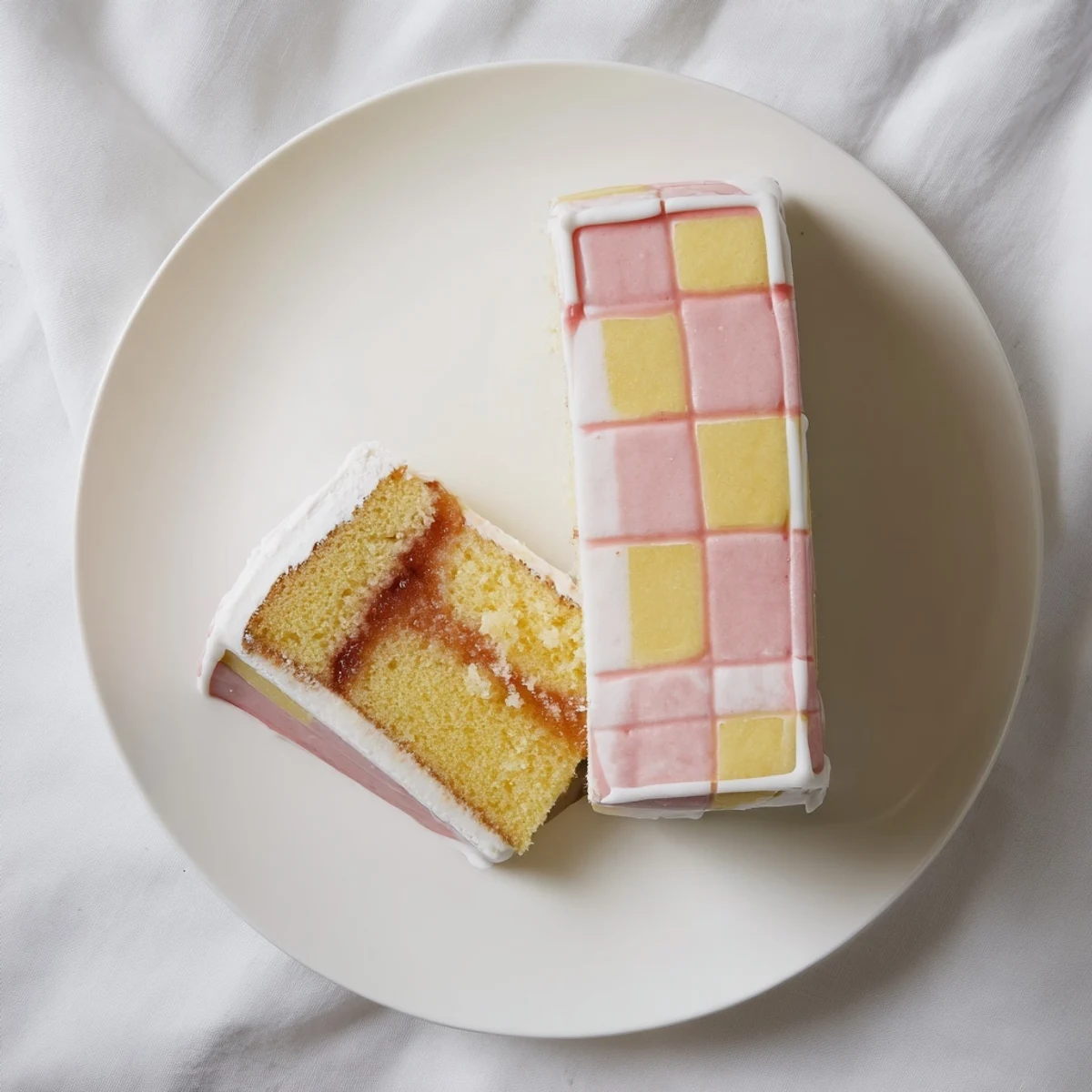
Save This delightful British classic features a signature pink and yellow checkerboard pattern made from light, fluffy sponge. The two coloured sponges are carefully assembled and held together with warm apricot jam, then completely wrapped in a layer of sweet marzipan. The result is a visually stunning cake that's perfect for afternoon tea or special occasions. Each slice reveals the beautiful checkerboard interior, while the marzipan adds a rich, nutty flavour that complements the vanilla-almond sponge perfectly.
The first time I attempted Battenberg Cake, I stood in my kitchen staring at two separately colored sponges wondering how on earth people created that perfect checkerboard pattern without everything collapsing into a colorful mess. My grandmother had served this at her birthday teas, each slice revealing that iconic two-tone design wrapped like a present in sweet marzipan, and I wanted badly to recreate that bit of edible geometry. After three attempts and some very creative language directed at a stubborn tin divider, I finally produced something resembling the classic British teatime treat. Now it is my go-to when I need a dessert that makes people pause and smile before they even take a bite.
I brought this to a garden party last summer, setting it on a cake stand among fresh flowers and linen napkins. My friend Sarah, who claims to dislike marzipan, took one hesitant slice and then immediately asked for the recipe, proving that the right balance can convert even skeptics. There is something deeply satisfying about cutting into that neat square and seeing the pattern you assembled with your own hands working exactly as planned.
Ingredients
- 175 g unsalted butter, softened: Room temperature butter creates the airy texture that makes this cake feel special rather than heavy
- 175 g caster sugar: The fine grains dissolve beautifully into the butter for that signature light crumb
- 3 large eggs: Bring these to room temperature too so they incorporate smoothly without curdling your mixture
- 140 g self raising flour: The lift agents here keep the sponge tender without making it tough or dry
- 65 g ground almonds: This subtle nuttiness pairs perfectly with the almond extract and marzipan for depth
- 1 tsp baking powder: Just enough extra insurance for even rising in both colored halves
- ½ tsp vanilla extract: A little warmth that rounds out the almond flavors
- ¼ tsp almond extract: The secret ingredient that makes this taste authentically British
- Pink food colouring: Gel colouring works best without adding excess liquid to your batter
- 200 g apricot jam: Warm this slightly so it spreads easily and acts as the glue for your pattern
- 350 g marzipan, plus extra for dusting: Store bought is perfectly fine but homemade adds something truly special
- Icing sugar, for dusting: Prevents the marzipan from sticking to your work surface during rolling
Instructions
- Prepare your divided tin:
- Create a waterproof divider using foil reinforced with parchment to split your square tin into two equal rectangles, then grease everything thoroughly
- Cream butter and sugar:
- Beat the softened butter and caster sugar until the mixture turns pale and fluffy, which usually takes about three minutes of patient mixing
- Add the eggs:
- Beat in each egg individually, letting the first fully incorporate before adding the next to maintain that silky emulsion
- Fold in the dry ingredients:
- Gently combine the flour, ground almonds, baking powder, vanilla extract, and almond extract until just mixed, being careful not to overwork the batter
- Color half the batter:
- Divide the mixture between two bowls and stir pink food colouring into one until you achieve a soft pastel shade
- Bake both sponges:
- Spoon each batter into its own side of the prepared tin, smooth the tops level, and bake for 25 to 30 minutes until a skewer comes out clean
- Cool completely:
- Let the cakes rest in the tin for ten minutes before moving them to a wire rack, because warm cakes will melt your jam filling
- Trim and cut:
- Remove the crusty edges from both sponges, then cut each colored rectangle in half lengthwise to create four equal strips
- Assemble the pattern:
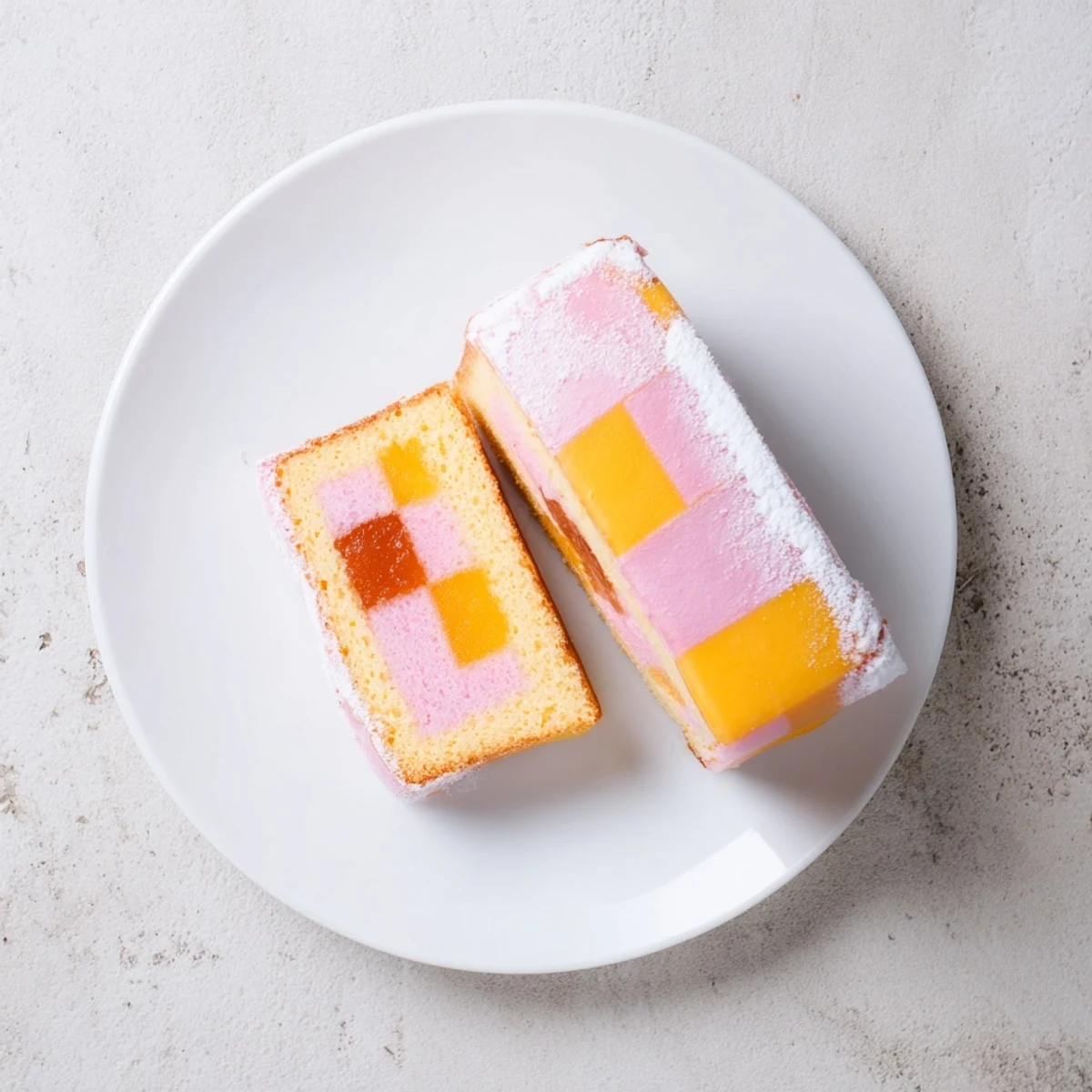
- Warm and sieve your apricot jam, brush it generously on the cut sides, and press the strips together alternating pink and yellow to form that classic checkerboard
- Wrap in marzipan:
- Roll the marzipan on an icing sugared surface into a rectangle, brush the assembled cake with more warm jam, then carefully wrap and seal the marzipan around it
 Save
Save My daughter now requests this for her birthday every year, carefully watching as I assemble the checkerboard and declaring it the most magical cake because it looks like a puzzle wrapped in sweet almond candy. There is something lovely about a dessert that requires just enough patience to make it feel special without demanding professional skills.
Getting That Checkerboard Right
The trickiest part is cutting those four strips exactly the same width, but I have found that using a ruler and marking the sponge lightly with a knife before cutting helps immensely. Do not worry if your first attempt is not perfectly geometric because the marzipan hides a multitude of sins and no one will notice once it is sliced.
Making the Marzipan Work
Keep your marzipan slightly cool but not cold, because warm marzipan becomes impossibly sticky while cold marzipan cracks when you try to wrap it. Work quickly but calmly, and if you get a small tear, simply press it back together with your warm fingertips and no one will ever know.
Storing and Serving
This cake actually improves after a day as the marzipan softens slightly and the flavors meld together beautifully. Store it in an airtight container at room temperature and bring it out about thirty minutes before serving so the texture is at its best.
- Slice with a sharp knife wiped clean between cuts for the neatest squares
- Try brushing the marzipan with lightly beaten egg and briefly toasting it under the grill for golden color
- The pattern looks most impressive when you slice fairly thick pieces rather than thin wisps
 Save
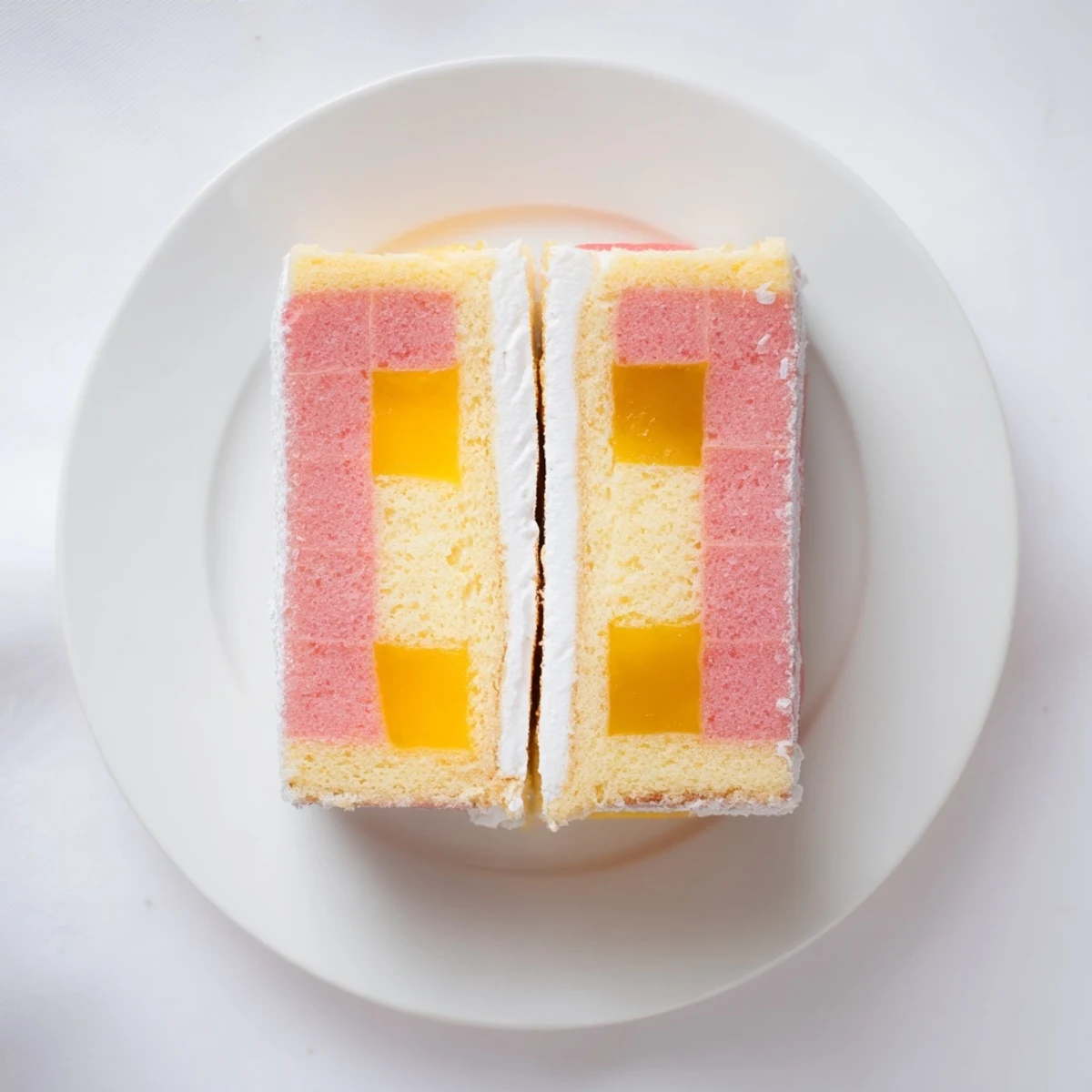
Save There is something deeply satisfying about serving a cake that looks so precise and elegant, knowing you created that checkerboard with your own hands and a little patience. It never fails to make people feel special.
Recipe FAQs
- → What makes Battenberg cake distinctive?
-
Battenberg cake is known for its signature checkerboard pattern created by alternating pink and yellow sponge squares. The distinctive look is achieved by baking two coloured sponges side by side, then cutting and assembling them in an alternating pattern before wrapping in marzipan.
- → Why is marzipan used in Battenberg?
-
Marzipan serves both aesthetic and practical purposes. It holds the checkerboard structure together, keeps the sponge moist, and provides the traditional sweet almond flavour that defines this British classic. The marzipan also creates the smooth, professional finish.
- → Can I make Battenberg without food colouring?
-
Yes, you can create natural colour variations. Use fruit purées like raspberry or strawberry for the pink portion, or simply leave both sections natural for a more subtle two-tone effect using different shades of golden sponge.
- → How long does Battenberg cake keep?
-
When stored in an airtight container, Battenberg keeps well for up to 4 days at room temperature. The marzipan wrapping helps maintain moisture, keeping the sponge fresh. Avoid refrigerating as this can cause the marzipan to become hard.
- → What's the secret to achieving clean checkerboard lines?
-
The key is precise cutting and even sizing of the sponge strips. Use a sharp knife and ruler to ensure all four pieces are identical in width. Warm, sieved apricot jam acts as an excellent glue, helping the pieces stick together neatly without gaps.
- → Can I substitute the apricot jam filling?
-
Absolutely! While apricot jam is traditional due to its subtle flavour that doesn't overpower the sponge, you can use raspberry, cherry, or even blackcurrant jam for variation. Just ensure the jam is warmed and sieved for smooth application.