
 Save
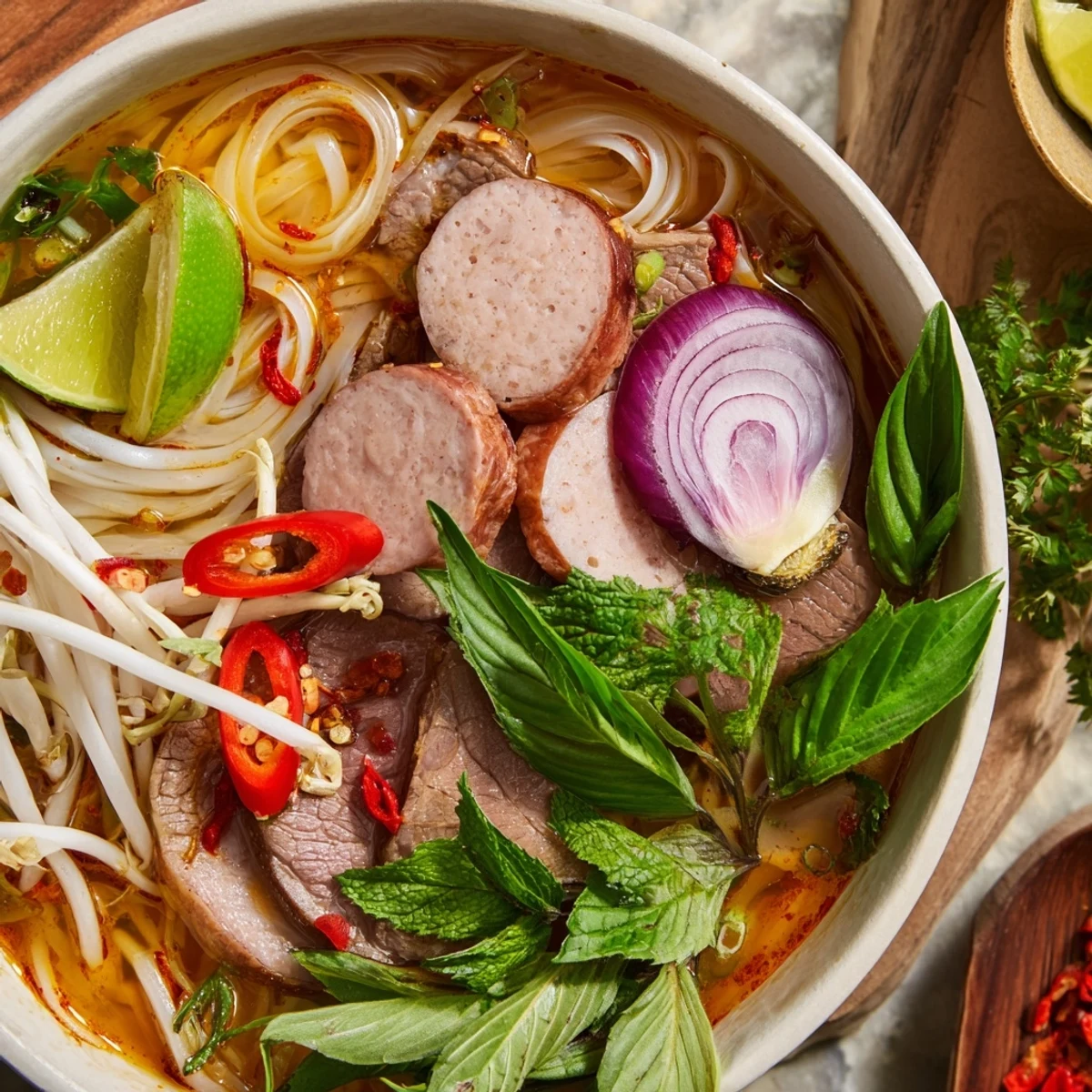
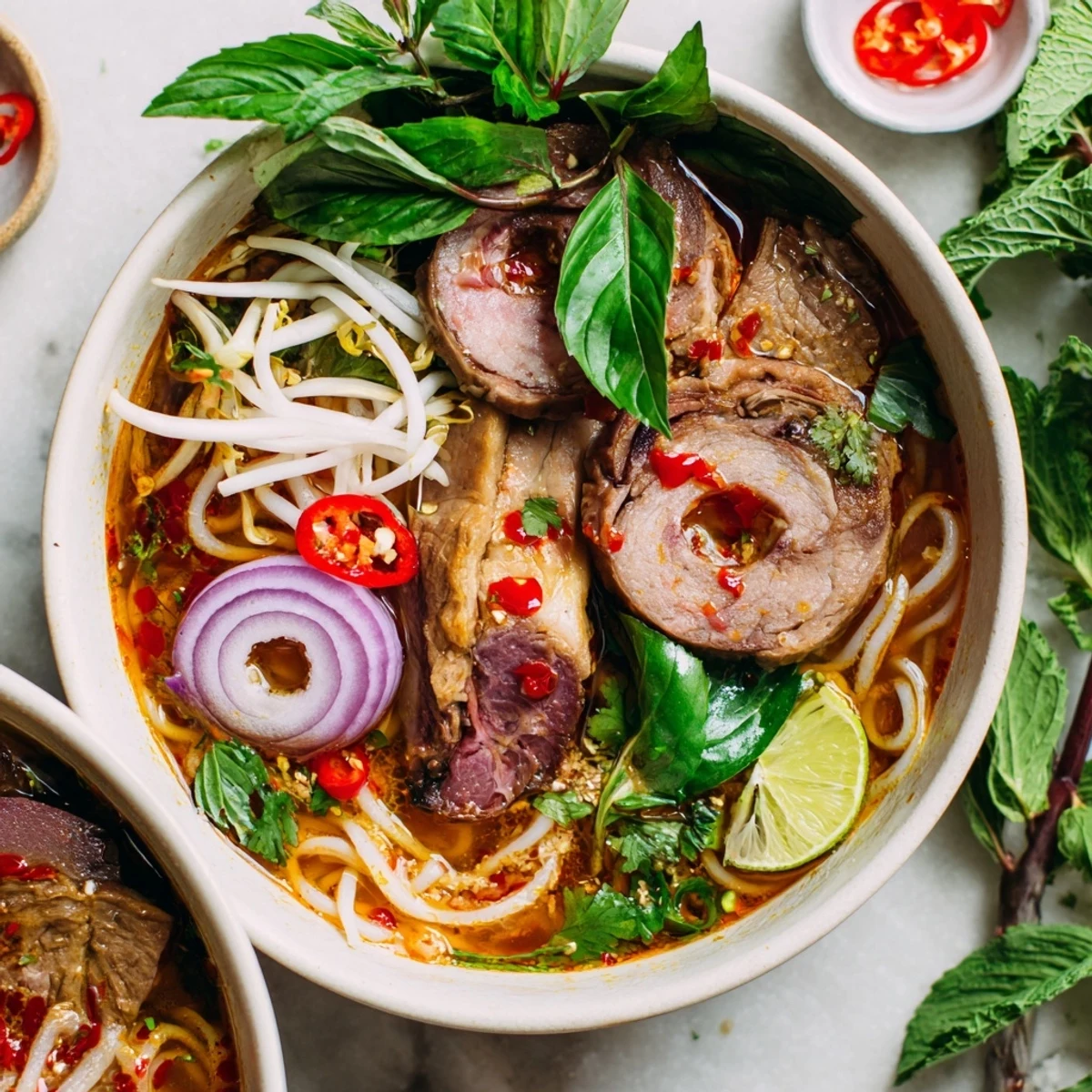
Save This traditional central Vietnamese specialty features a richly spiced broth infused with lemongrass, shrimp paste, and aromatic chili oil. The soup combines tender beef shank, pork hock, and sliced brisket with thick round rice noodles, creating a hearty bowl that's both warming and invigorating. Fresh herbs, bean sprouts, and lime add brightness, while the signature red chili oil delivers authentic Hue-style heat.
The first time I encountered Bun Bo Hue was in a tiny family run restaurant where the proprietors six year old daughter was expertly shucking banana blossoms by the doorway. That vibrant reddish orange broth arrived steaming and fragrant and I immediately understood why this soup commands such devotion in Hue.
Last winter I spent an entire Sunday perfecting this broth. My apartment smelled so incredible that my neighbor actually knocked on the door to ask what I was cooking. We ended up sharing bowls while watching the snow fall outside.
Ingredients
- Beef shank: Bone in adds essential body to the broth and the meat becomes meltingly tender after hours of simmering
- Pork hock: This cut contributes richness and a slightly gelatinous texture that makes the broth feel luxurious
- Lemongrass: Bruising the stalks releases their citrusy oils which is the signature aromatic note of this dish
- Shrimp paste: Do not skip this fermented ingredient it provides the deep umami foundation that separates authentic Bun Bo Hue from mere beef soup
- Thick rice noodles: The round bun bo hue noodles have a satisfying chew that stands up to the robust broth
- Annatto seeds: These give the broth its characteristic reddish orange hue without adding much flavor
- Chili flakes: Adjust based on your heat tolerance but remember the warming kick is essential to the experience
Instructions
- Prepare the broth foundation:
- Bring the beef shank and pork hock to a boil in water for five minutes then drain and rinse thoroughly. This step removes impurities that would cloud your final broth. Return the cleaned meat to the pot with fresh water and add lemongrass onion garlic and ginger. As it comes to a boil skim any foam that rises to the surface.
- Simmer to perfection:
- Lower the heat and add fish sauce salt sugar rock sugar and shrimp paste. Let everything simmer gently for about two hours until the meat is fork tender. Remove the meats and slice them into bite sized pieces then strain the broth discarding the solids. Taste and adjust seasoning as needed.
- Make the aromatic chili oil:
- Heat vegetable oil in a small pan and add annatto seeds if using. Cook for a minute or two until the oil turns a beautiful red then discard the seeds. Sauté shallots and garlic until fragrant then stir in chili flakes and cook briefly. Set aside this flavorful oil.
- Prepare the components:
- Cook the rice noodles according to package directions drain and set aside. If using pork blood cubes simmer them gently for ten minutes then slice. Thinly slice your cooked beef brisket and cha lua sausage.
- Assemble your bowls:
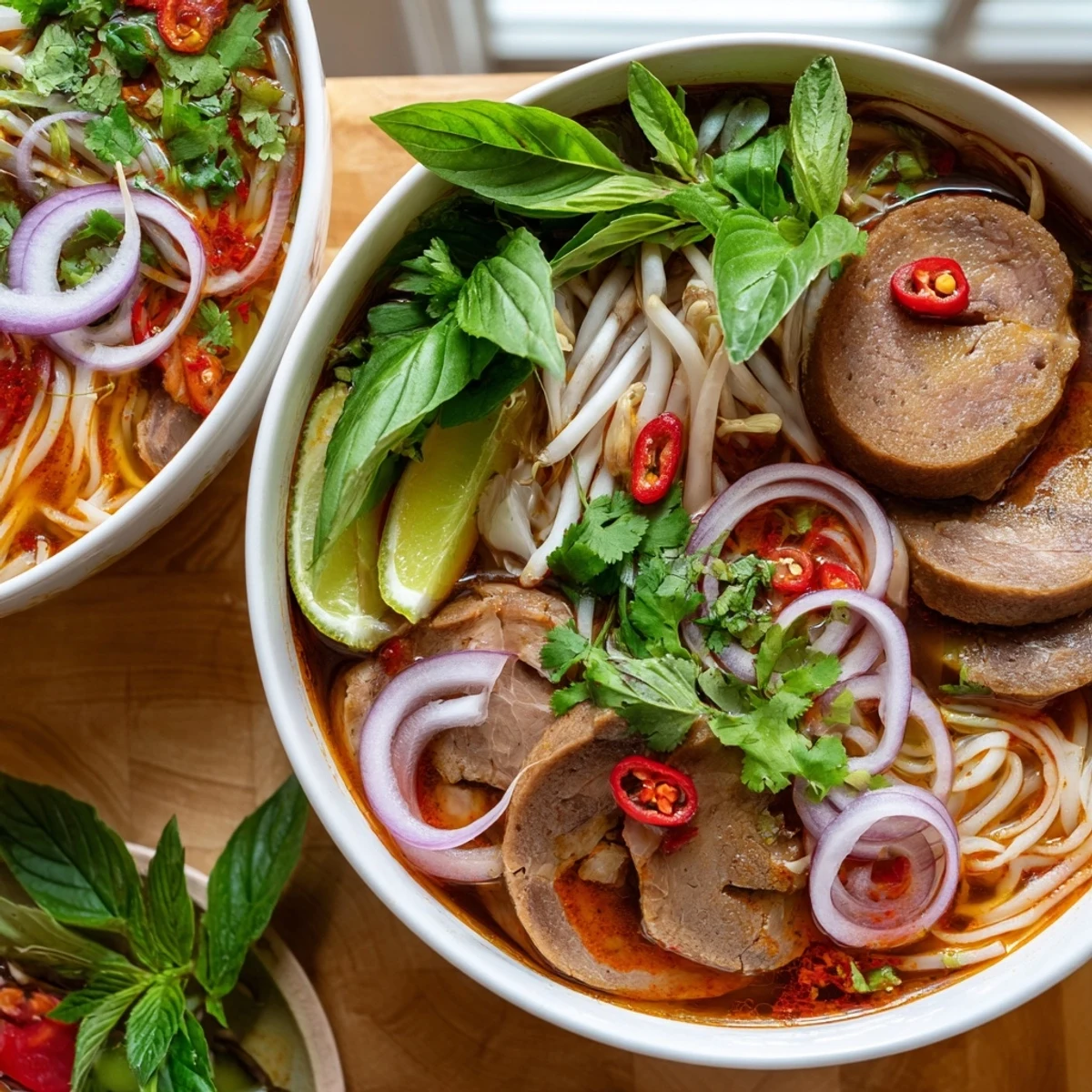
- Place a portion of noodles in each bowl and arrange beef shank pork hock brisket blood cubes and cha lua on top. Ladle the hot broth over everything then drizzle with that aromatic chili oil you made. The broth should be piping hot when it hits the bowl.
- Add the finishing touches:
- Serve immediately with red onion lime wedges bean sprouts banana blossom fresh herbs scallions and chili slices on the side. Let everyone customize their bowl with these garnishes. Squeeze fresh lime right before eating for a bright acidic contrast.
 Save
Save This soup has become my go to comfort food whenever anyone in my household is feeling under the weather. Something about that spicy aromatic broth just feels restorative.
Finding The Right Balance
The interplay between spicy salty sweet and sour is what makes Bun Bo Hue extraordinary. I keep a small bowl of lime wedges and extra chili oil on the table so everyone can adjust their bowl to their perfect balance of flavors.
Make Ahead Strategy
The broth actually improves after a night in the refrigerator allowing the flavors to meld more deeply. I often make a double batch and freeze portions in containers for those nights when cooking from scratch feels impossible.
The Art of Garnishes
Fresh herbs are not optional here they provide a bright contrast to the rich broth. The combination of mint Thai basil and cilantro adds layers of freshness.
- Shred banana blossom just before serving to prevent browning
- Bean sprouts should be crisp and cold when they hit the hot broth
- Lime wedges lose their punch quickly so squeeze them right before eating
 Save
Save There is something deeply satisfying about assembling each bowl with care knowing that slurping hot noodles will soon warm everyone from the inside out.
Recipe FAQs
- → What makes Bun Bo Hue different from pho?
-
Bun Bo Hue originates from central Vietnam and features a spicier, more complex broth with lemongrass and shrimp paste. The noodles are thicker and rounder compared to pho's flat rice noodles. The soup also includes pork hock and sometimes pork blood cubes, giving it a richer, more robust flavor profile.
- → Can I make the broth in advance?
-
Absolutely. The broth actually develops deeper flavors when made ahead. You can prepare it up to 2 days in advance and store it in the refrigerator. Skim off any solidified fat before reheating. The cooked meats can also be sliced and refrigerated separately.
- → Is shrimp paste essential for this dish?
-
Shrimp paste (mam ruoc) provides the distinctive savory depth that characterizes authentic Bun Bo Hue. While you can substitute with extra fish sauce, you'll miss that unique umami complexity. Look for it in Asian markets or the international aisle of well-stocked grocery stores.
- → How spicy is this soup?
-
Traditional Bun Bo Hue is moderately to quite spicy, depending on personal preference. The aromatic chili oil provides the primary heat source, plus fresh bird's eye chilies are served on the side. You can easily adjust the spiciness by reducing or increasing the chili flakes in the oil.
- → What can I substitute for pork blood cubes?
-
Pork blood cubes are traditional but entirely optional. Many home cooks omit them, and the soup remains delicious without. If you'd like a similar silky texture, you could add extra tofu puffs or simply enjoy the soup with more beef and pork portions.
- → Where can I find thick rice noodles?
-
Look for bun bo Hue noodles or thick round rice noodles at Asian markets, Vietnamese grocery stores, or in the international aisle of larger supermarkets. If unavailable, udon noodles can work as a substitute, though the texture will be slightly different.