
 Save
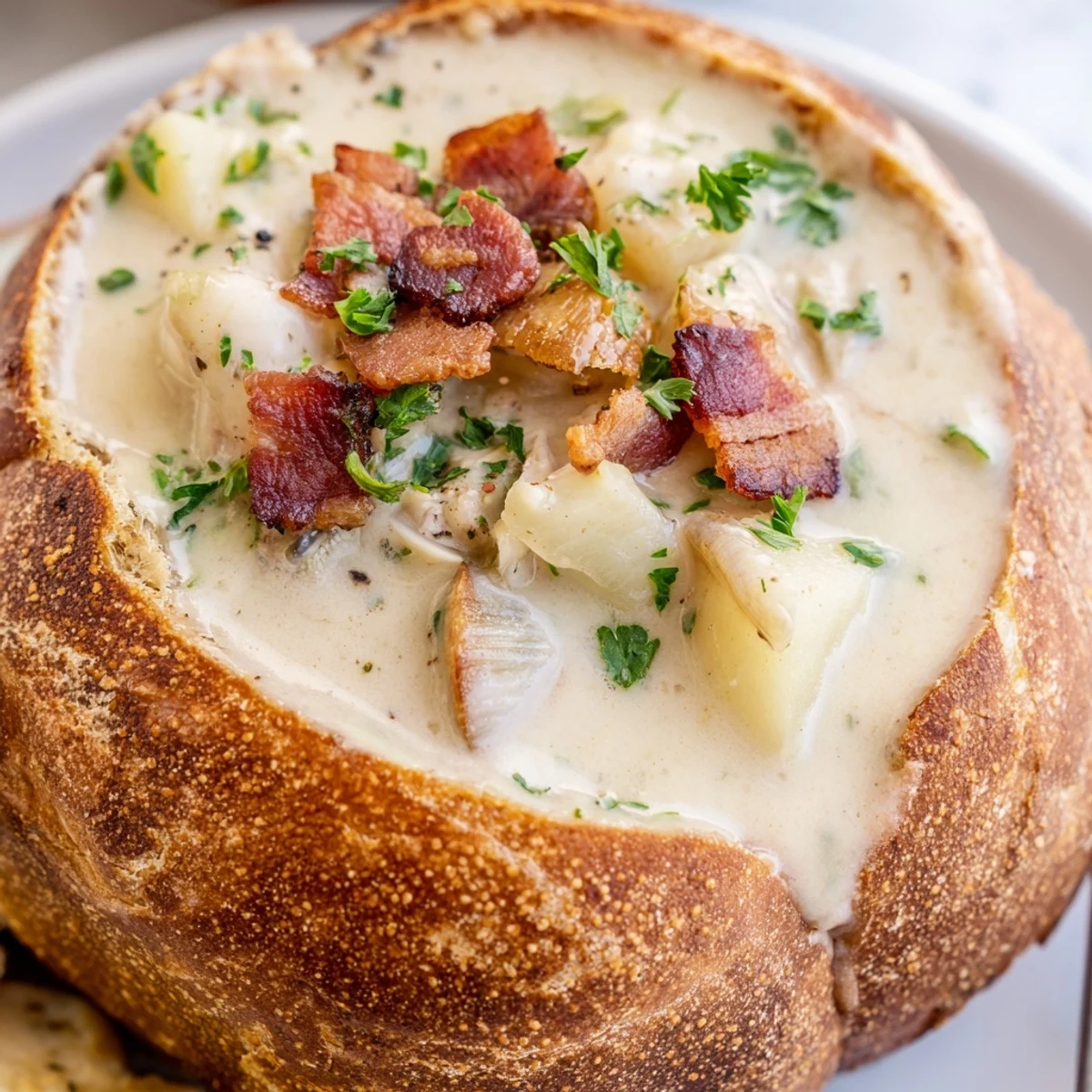
Save This chowder brings together tender clams, diced potatoes, and smoky bacon in a rich creamy base. Sautéed onions, celery, and garlic create the flavorful foundation, thickened with a buttery roux. The chowder simmers until perfectly cooked, then is ladled into toasted sourdough bread bowls for a comforting presentation. Garnished with fresh parsley and cracked black pepper, it’s an inviting meal ideal for cooler days or anytime craving warmth and depth.
The snow was falling sideways when I first attempted this chowder, having just moved to a drafty apartment where the heater worked intermittently at best. My grandmother had called suggesting something warm and substantial, and somehow a creamy soup with bacon and bread seemed like the perfect solution to a freezing Tuesday evening. That first batch was admittedly too thick, more like mashed potatoes than soup, but the flavor was absolutely transporting. I have been refining the technique ever since, learning that restraint with the roux and patience with the simmer make all the difference.
I hosted a winter solstice dinner last year where this chowder was the main event, and my friend who swore she hated shellfish went back for thirds. There is something profoundly communal about dipping bread into a shared pot, steam rising between us, while the wind howls outside. The conversation always seems to linger longer when comfort food this good is on the table.
Ingredients
- Chopped clams (2 cans): I always reserve every drop of the clam juice because that liquid gold is what makes the broth taste like the ocean rather than just cream
- Bottled clam juice (1 cup): If you cannot find this, fish stock works in a pinch, but the clam juice gives that authentic New England depth you cannot fake
- Thick-cut bacon (4 slices): The smokiness from the bacon fat becomes the foundation of the entire dish, so do not skimp on quality here
- Yellow onion (1 cup): Finely chopped is key because you want the onion to essentially melt into the base rather than having distinct chunks
- Celery (1 cup): This provides the essential aromatic backbone and that subtle savory note that distinguishes chowder from mere potato soup
- Russet potatoes (1½ cups): I peel and dice them into exactly half-inch cubes so they cook evenly and release just enough starch to naturally thicken the broth
- Garlic (2 cloves): Minced finely and added only briefly so it mellows into sweetness without becoming bitter or harsh
- Unsalted butter (2 tablespoons): Combined with the bacon fat, this creates the rich base that carries all the other flavors
- Heavy cream (1 cup): This is what transforms the soup from a broth into a chowder, creating that luxurious texture that coats the spoon
- Whole milk (1 cup): Using half cream and half milk prevents the chowder from becoming overwhelmingly heavy while still maintaining body
- All-purpose flour (¼ cup): This forms the roux that thickens everything, and I have learned to cook it thoroughly to avoid any raw flour taste
- Bay leaf (1): A single leaf adds that mysterious background note that people notice but cannot quite identify
- Dried thyme (½ teaspoon): Just enough to complement the seafood without overpowering the delicate clam flavor
- Sourdough bread loaves (4 small rounds): I look for loaves with thick, crusty exteriors and tight crumbs so they hold up to being filled with hot soup
- Fresh parsley: A sprinkle on top adds brightness and color that cuts through all that rich creaminess
Instructions
- Prepare the bread bowls:
- Preheat your oven to 350°F and slice the tops off those sourdough loaves, then carefully hollow them out until the walls are about half an inch thick. I use my hands to pull out the soft interior rather than a knife, which gives you more control and prevents accidental punctures. Toast both the bowls and their tops on a baking sheet for 10 minutes until they are slightly crisp and ready to hold all that creamy goodness.
- Cook the bacon:
- In a large heavy pot over medium heat, cook the diced bacon until it is beautifully crispy, which usually takes about 5 minutes. Remove the bacon with a slotted spoon and set it aside on paper towels, but definitely keep those 2 tablespoons of rendered fat in the pot because that is liquid gold.
- Sauté the vegetables:
- Add the butter to the bacon fat and toss in your onion and celery, cooking them until they are softened and fragrant, about 5 minutes. Stir in the garlic for just 1 minute because you want it aromatic and sweet, not browned or bitter.
- Make the roux:
- Sprinkle the flour over the vegetables and stir constantly for 2 minutes, watching it turn from dry to bubbling and paste-like. This step cooks out the raw flour taste and creates the thickening base that will give your chowder that classic velvety texture.
- Build the broth:
- Gradually whisk in the reserved clam juice and bottled clam juice, followed by the bay leaf, potatoes, and thyme. Bring everything to a gentle simmer, cover the pot, and let it cook for 12 to 15 minutes until the potatoes are tender when pierced with a fork.
- Add the cream and clams:
- Reduce the heat to low and stir in the clams, crispy bacon, milk, and heavy cream. Let it simmer gently for just 5 minutes, being careful not to let it boil, and season with salt and pepper before removing the bay leaf.
- Assemble and serve:
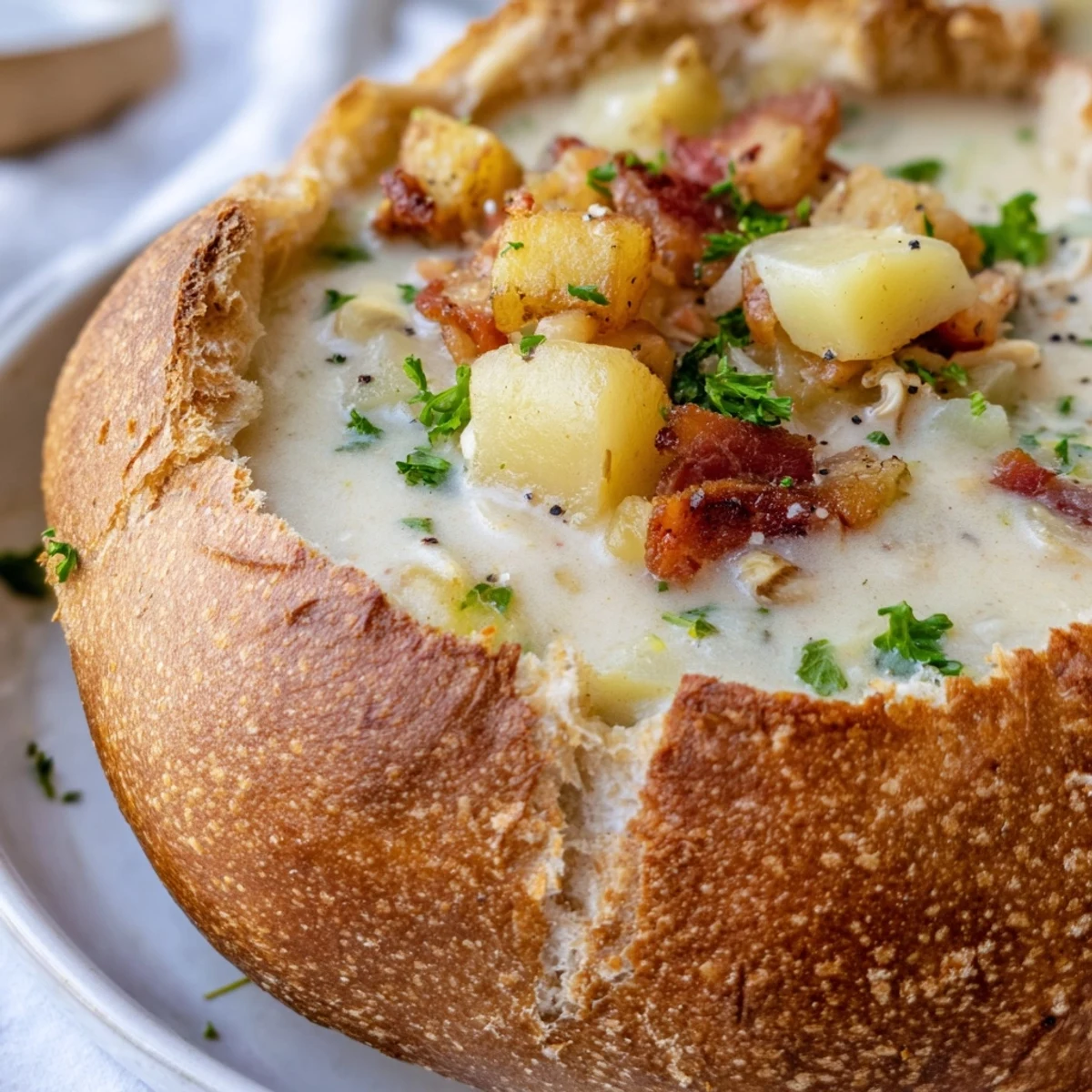
- Ladle the hot chowder into those prepared sourdough bowls, filling them almost to the top, and garnish with fresh parsley and extra cracked black pepper. Serve immediately while the bread is still warm and slightly crisp, with the tops on the side for dipping.
 Save
Save My daughter now requests this every time the first snow falls, saying it is the only thing that makes winter bearable. Watching her tear pieces of bread from the bowl to soak up every last drop of broth reminds me why some recipes become traditions rather than just dinner.
Making It Your Own
I have discovered that adding a splash of dry sherry right before the cream introduces this wonderful complexity that makes people ask what your secret ingredient is. If you want to make it extra luxurious, try stirring in a handful of corn kernels with the potatoes for little bursts of sweetness throughout.
Fresh Clams Option
When fresh clams are available and looking good at the market, I steam about 2 pounds in a pot with just a splash of water until they open, then reserve every drop of that precious liquid. The flavor difference is noticeable, and the texture of fresh clam meat in the chowder feels like a genuine upgrade worth the extra effort.
Bread Bowl Secrets
After years of soggy disasters, I learned that brushing the inside of the hollowed bread bowls with a little olive oil and giving them an extra 5 minutes in the oven makes all the difference. This creates a slight barrier that keeps the bread firm enough to hold the chowder without becoming mushy too quickly.
- Save the bread you remove from the inside and cut it into cubes for croutons in salads the next day
- If you cannot find round sourdough, any crusty artisanal bread works, though the presentation will be different
- Leftover chowder actually tastes better the next day as the flavors have more time to meld together
 Save
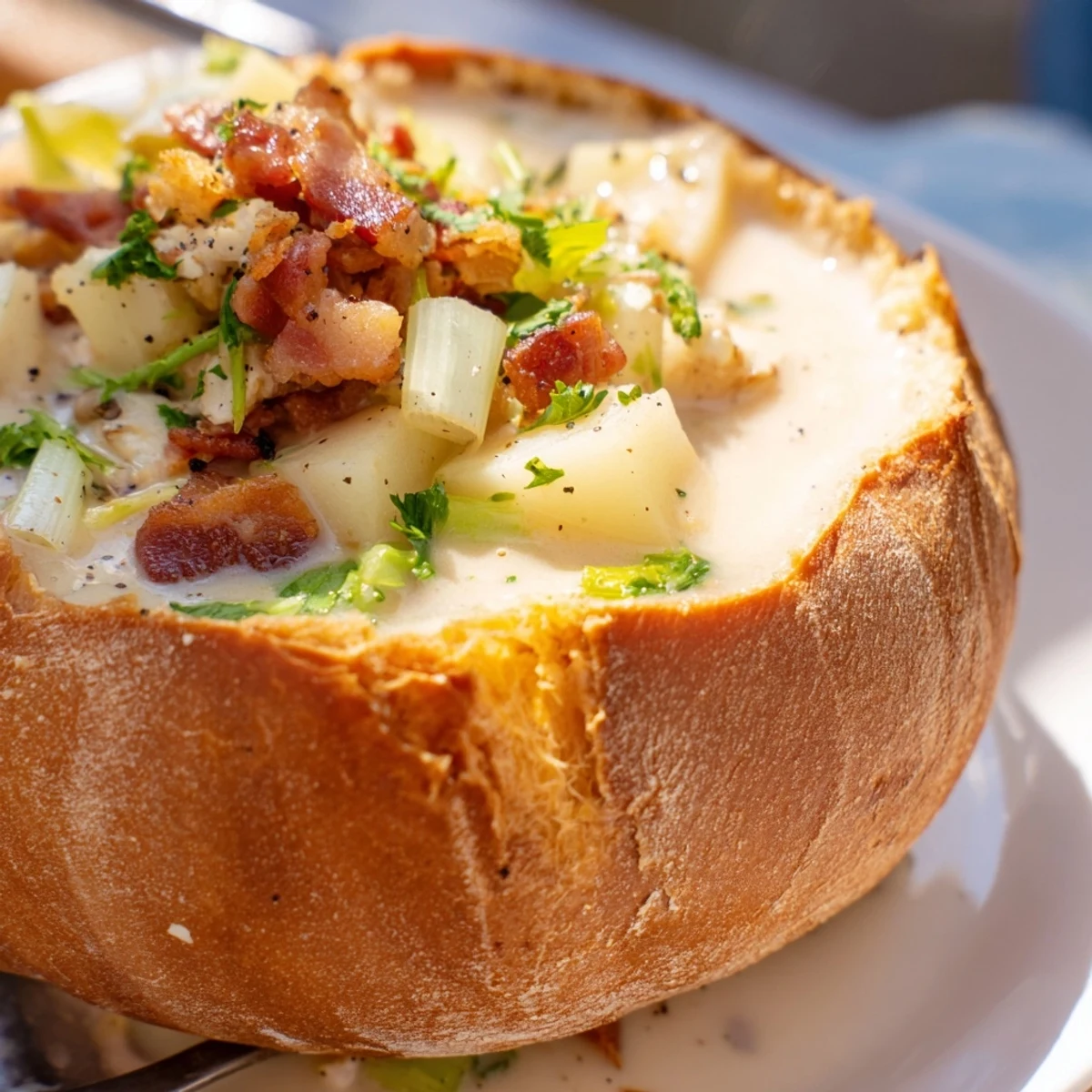
Save There is something deeply satisfying about tearing off pieces of sourdough soaked in creamy chowder, the kind of meal that demands you slow down and savor every bite. May your kitchen be warm and your bread bowls never soggy.
Recipe FAQs
- → How do I prepare the sourdough bread bowls?
-
Slice off the top of small sourdough loaves and hollow out the interior, leaving about half an inch of bread walls. Toast them in a 350°F oven for 10 minutes until slightly crisp.
- → Can I substitute bacon with other meats?
-
Yes, smoked ham can be used instead of bacon to add a different smoky flavor.
- → What thickens the chowder base?
-
A roux made by cooking flour with butter and sautéed vegetables helps thicken the chowder to a creamy consistency.
- → Is fresh clam juice necessary?
-
While bottled clam juice works well, using reserved juices from fresh steamed clams adds a richer, authentic flavor.
- → How should I store leftovers?
-
Keep leftovers refrigerated in a sealed container. The chowder may thicken after cooling; stir in extra milk to adjust consistency before reheating gently.