
 Save
Save Master the art of making authentic Greek yogurt at home using whole milk and a starter culture. This straightforward technique involves heating milk to the perfect temperature, culturing for several hours, then straining to achieve that signature thick, creamy texture. The result is a tangy, protein-rich yogurt that surpasses store-bought versions in both taste and quality.
My grandmother kept a thermometer in her yogurt bowl like it was a precious metal. She'd check the temperature with the seriousness of a scientist, insisting that 110 degrees was the magic number where milk transforms into something living. I make yogurt now and think about her every single time, even though I use a digital thermometer instead of whatever worn glass one she had.
Last summer, my neighbor came over while I was straining a batch. She watched me pour the warm yogurt into the cheesecloth lined colander and asked if I'd lost my mind, spending all day on something I could buy for three dollars. Then she tasted it with a drizzle of honey and a handful of fresh figs from her tree, and she asked me to teach her the next day.
Ingredients
- Whole milk: The fat content matters here. Skim milk produces thin, disappointing yogurt that never quite thickens up properly.
- Plain yogurt with live cultures: Use a good quality plain yogurt as your starter. The first time I made this, I accidentally used a flavored yogurt starter. It worked, but the vanilla undertones were strange.
Instructions
- Heat the milk:
- Pour the milk into a saucepan and warm it over medium heat until it reaches 82°C, stirring occasionally so it doesnt scorch on the bottom.
- Let it cool:
- Remove from heat and wait until the temperature drops to 43°C. This usually takes about 30 minutes.
- Make your starter:
- Whisk 2 tablespoons of the cooled milk with your yogurt starter until perfectly smooth.
- Combine everything:
- Pour the starter mixture back into the warm milk and stir gently but thoroughly.
- Culture the yogurt:
- Pour into a clean container, cover, and wrap in a towel. Let it sit undisturbed for 6 to 8 hours.
- Strain it thick:
- Line a strainer with cheesecloth, set it over a bowl, and refrigerate for 1 to 2 hours until it reaches your desired thickness.
 Save
Save My daughter now asks for this every weekend. She calls it the cream that we make, and she tops hers with whatever berries are in season. Watching her spoon it into her mouth with that look of pure satisfaction makes the eight hour wait feel like nothing at all.
Choosing Your Milk
Ive tried making this with different milk types, and the results vary dramatically. Goat milk produces a tangier yogurt with a earthy undertone that took me some getting used to. Sheep milk makes the creamiest version Ive ever tasted, but it costs twice as much and some weeks that just isnt practical.
The Waiting Game
The hardest part of this recipe is the patience it requires. Eight hours of culturing time feels ridiculous in our instant everything world. But that transformation from milk to something living, something that coats your spoon and clings to the back of a spoon, happens on its own schedule.
Serving Ideas
The whey that strains off is packed with protein and Ive started using it in smoothies instead of regular milk. Sometimes I swirl a spoonful of this yogurt into soups to add creaminess without the heaviness of cream.
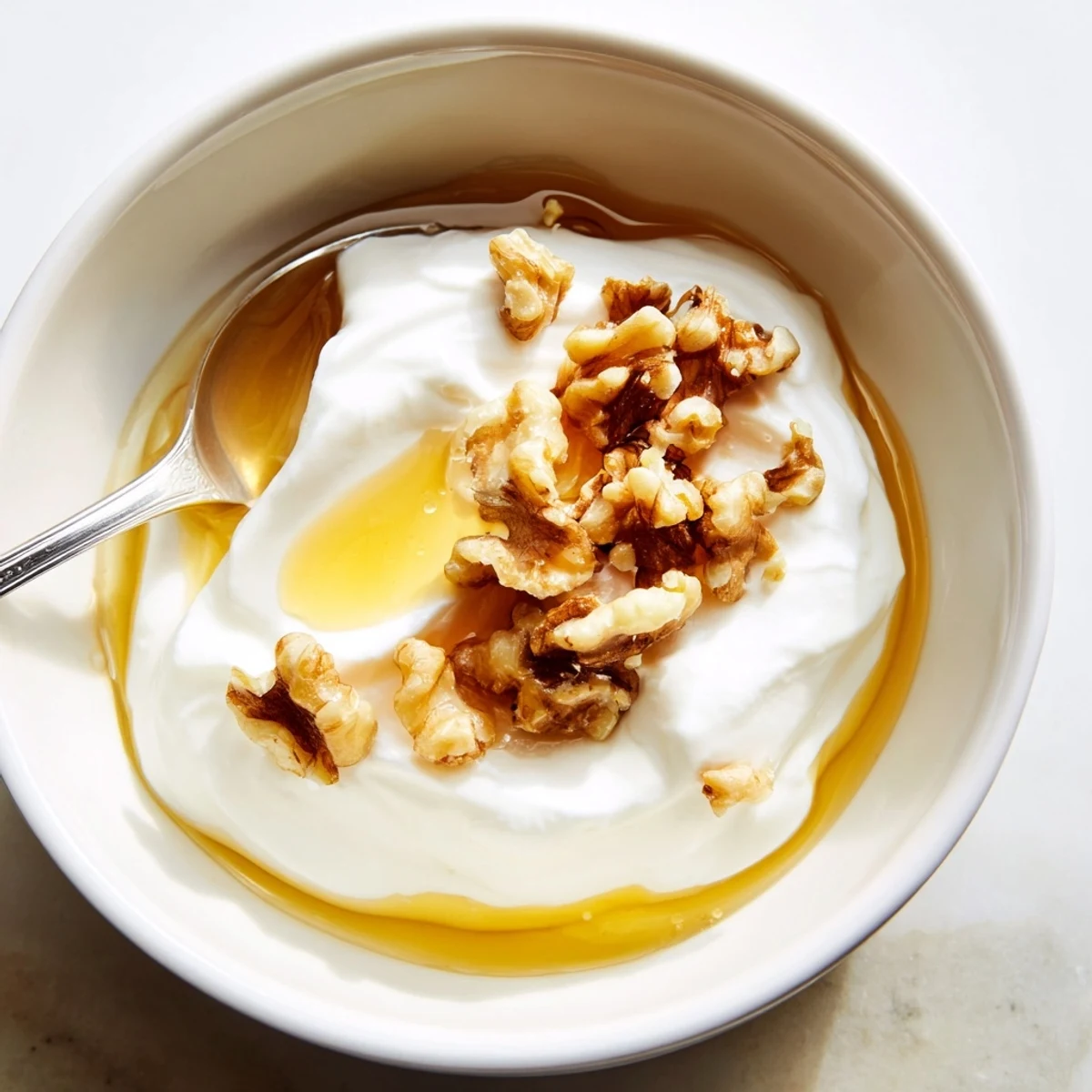
- Top with honey and walnuts for a classic breakfast that feels like dessert
- Mix with garlic and cucumber for tzatziki that puts restaurant versions to shame
- Serve alongside savory dishes where you want something cool to balance the heat
 Save
Save Theres something profoundly satisfying about making your own yogurt, something that connects you to every person who ever performed this simple transformation. Plus, it tastes better.
Recipe FAQs
- → What makes Greek yogurt different from regular yogurt?
-
Greek yogurt undergoes straining to remove whey, resulting in a thicker, creamier texture with higher protein content compared to regular yogurt.
- → How long does homemade Greek yogurt last?
-
Properly stored in the refrigerator, homemade Greek yogurt stays fresh for up to two weeks. Keep it in an airtight container to maintain quality.
- → Can I use low-fat milk instead of whole milk?
-
While whole milk produces the creamiest results, you can use low-fat or skim milk. The final texture will be less rich but still delicious.
- → What can I do with the whey from straining?
-
The strained whey contains protein and nutrients. Use it in smoothies, baking, or as a liquid substitute in pancakes and muffins.
- → Do I need a yogurt maker to make Greek yogurt?
-
No special equipment is required. A warm spot in your kitchen or an oven with the light on works perfectly for culturing the yogurt.
- → Why did my yogurt not set properly?
-
This usually happens if the milk was too hot when adding the starter, or if the culturing environment wasn't warm enough. Ensure milk cools to 43°C before combining.